
Dallas has long been recognized as a city that knows how to welcome visitors. Business conventions, concerts, cultural festivals, and large sporting events have helped shape its reputation as a destination where people gather not only for what happens inside a venue, but also for everything that surrounds the experience.
For many travelers, a memorable visit isn’t defined solely by the event on their itinerary. It’s the restaurant where they shared dinner with friends, the neighborhood they explored before sunset, or the conversations that continued long after the day’s schedule ended. Those moments often become the stories people remember most.
That is one reason dining and hospitality play such an important role in Dallas. Restaurants, cafés, event venues, and local businesses help transform a trip into something far more personal. They create places where residents and visitors naturally come together, adding character to a city that continues to grow as both a business hub and a leisure destination.
Among the neighborhoods that best represent this experience is the West End. Rich in history while embracing modern hospitality, it offers visitors an opportunity to experience a side of Dallas that extends well beyond any single event.
Why Dallas continues to attract visitors through major sporting events
Every city has landmarks that draw attention, but only a handful consistently host experiences that bring together visitors from across the country and around the world.
Dallas has become one of those cities.
Its accessibility, thriving downtown, diverse culinary scene, and strong hospitality industry make it well suited for large-scale gatherings throughout the year. While sporting events certainly contribute to that momentum, they also create opportunities for travelers to discover neighborhoods they may not have otherwise explored.
A family visiting Dallas for a weekend tournament, for example, may arrive expecting to spend most of their time inside an arena or stadium. Instead, they often find themselves exploring local restaurants, walking through historic districts, and extending their stay to experience more of the city.
Those unexpected discoveries frequently become highlights of the trip.
The same is true for business travelers who schedule meetings around major events or groups of friends planning long weekends together. Dining, entertainment, and neighborhood experiences naturally become part of the itinerary.
Dallas succeeds because it offers far more than the event itself.
How hospitality becomes part of the visitor experience
Hospitality begins long before guests take their seats at a restaurant.
It starts with how easily visitors can navigate a neighborhood, how welcoming local businesses feel, and how naturally a city encourages people to slow down and enjoy their surroundings.
Dallas has cultivated an environment where visitors can move seamlessly from professional meetings to dinner reservations, from sightseeing to evening celebrations, often within the same part of the city.
Consider a group of colleagues attending a conference during one of the city’s busiest weeks. Rather than returning directly to their hotel after the day’s sessions, they decide to explore Downtown Dallas. What begins as a simple search for dinner turns into an evening of conversation, shared meals, and discovering a neighborhood they hadn’t planned to visit.
Those experiences create lasting impressions because hospitality is rarely defined by a single interaction. Instead, it emerges through many small details working together.
Restaurants, local businesses, and event venues all contribute to making visitors feel connected to the city rather than simply passing through it.
Why dining in Downtown Dallas is about more than food
A meal often serves as the centerpiece of a memorable day, but in Downtown Dallas, dining is rarely just about what’s on the table.
The surrounding environment shapes the experience just as much as the menu itself. Historic architecture, walkable streets, vibrant public spaces, and an active local community all contribute to an atmosphere that encourages people to linger a little longer.
Whether someone is meeting old friends, entertaining clients, or celebrating a special occasion, choosing the right location can elevate the entire experience.
Among the restaurants contributing to this evolving dining culture is 3 Eleven Dallas, a modern dining destination that reflects both the energy of Downtown Dallas and the character of the West End. Rather than simply offering a place to eat, venues like 3 Eleven become part of the broader experience visitors take home with them.
Explore more about this dining experience at:
For many travelers, the restaurant they remember most isn’t necessarily the most famous. It’s the one that perfectly matched the atmosphere of the day and created space for meaningful conversations.
How the West End continues to welcome residents and visitors alike
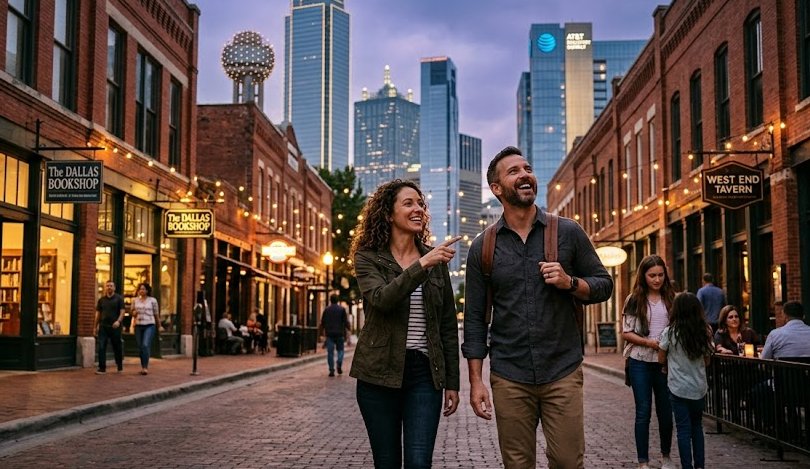
Few neighborhoods capture Dallas’ ability to blend history with modern hospitality quite like the West End.
Its preserved brick buildings, walkable streets, and mix of restaurants and gathering spaces create an environment that feels welcoming to first-time visitors while remaining familiar to longtime residents.
Someone arriving early for an evening event may spend an hour wandering through the neighborhood, discovering local businesses they hadn’t planned to visit. A couple celebrating an anniversary may choose to begin their evening with a walk before dinner. Families visiting Dallas often appreciate finding an area where history, architecture, and dining exist within easy walking distance.
The West End succeeds because it encourages exploration rather than rushing visitors from one destination to another.
Its character reminds people that memorable travel experiences often happen between the scheduled moments.
Private gatherings, celebrations, and business events beyond game day
While major sporting weekends often bring new energy to Dallas, the city’s hospitality industry continues thriving long after the crowds have gone home.
Restaurants and event venues play an important role in that ongoing story. Business meetings, networking events, milestone celebrations, rehearsal dinners, birthday parties, and family gatherings all contribute to keeping Downtown Dallas active throughout the year.
Many organizations also choose to schedule client dinners or team events around periods of increased activity in the city. Doing so allows guests to experience not only a productive meeting, but also the atmosphere that makes Dallas such an appealing destination.
Imagine a company welcoming clients from several states. After a full day of meetings, the group gathers for dinner in the West End instead of returning to a hotel conference room. The relaxed setting encourages conversation, strengthens professional relationships, and allows visitors to experience a different side of the city.
For hosts, choosing the right venue is about more than convenience. Accessibility, atmosphere, service, and flexibility all contribute to a successful event.
Businesses and organizations looking for private events can explore available options at:
Likewise, groups planning off-site meetings, celebrations, or corporate functions may benefit from professional catering services that simplify planning while enhancing the guest experience.
Learn more at:

What visitors remember long after the event ends
Ask someone about a memorable trip, and they’ll rarely begin by describing a schedule.
Instead, they’ll remember the restaurant where everyone stayed longer than expected, the neighborhood they discovered by accident, or the evening spent talking over dinner after a busy day.
Those are the experiences that transform travel into lasting memories.
For many visitors, Dallas leaves that kind of impression because it combines energy with authenticity. A city can host thousands of people for a major event, yet still offer neighborhoods that feel approachable, walkable, and welcoming.
That balance is increasingly valuable as travelers seek experiences that feel personal rather than scripted.
The West End reflects this perfectly. Visitors often arrive with one destination in mind and leave having experienced much more than they originally planned.

How local businesses help shape Dallas’ identity
Cities are remembered not only for their skyline or major attractions but also for the people and businesses that welcome visitors every day.
Independent restaurants, hospitality teams, event professionals, and neighborhood businesses collectively shape how guests experience Dallas.
Their contribution extends beyond serving meals or hosting events. They create spaces where conversations happen, celebrations unfold, partnerships begin, and visitors gain a genuine sense of the city’s personality.
Neighborhoods such as the West End demonstrate how local businesses help preserve character while supporting continued growth. Historic architecture provides the setting, but it is the hospitality within those buildings that keeps people returning.
As Dallas continues attracting visitors from across the country and around the world, its restaurants and gathering places will remain essential to the city’s identity.
Final thoughts
Major sporting events may draw visitors to Dallas, but they are only one chapter in a much larger story.
The experiences people remember most often happen away from the main venue—during dinner with friends, conversations shared over great food, evening walks through historic streets, or celebrations hosted in welcoming spaces.
Those moments reveal the true character of the city.
Downtown Dallas and the West End continue offering opportunities to connect with history, hospitality, and community in meaningful ways. Whether someone is visiting for business, leisure, or a special event, discovering local neighborhoods often becomes one of the most rewarding parts of the trip.
As part of that evolving hospitality landscape, 3 Eleven Dallas reflects the welcoming spirit that defines the neighborhood. Through memorable dining experiences, thoughtfully designed event spaces, and a commitment to genuine hospitality, it contributes to the experiences that encourage visitors to return long after their first visit.
